1000 Middle Yan’an Road, Jing’an, Shanghai
The Lost Aili Garden
爱俪园 · 哈同花园
Behind the walls of Hardoon’s garden
Beside today’s West Nanjing Road once stood a private world of pavilions, water and homes. Garden photographs, a museum-held group portrait from 1912 and the site today introduce Silas Hardoon, Luo Jialing and their vanished estate.
Follow its history through photographs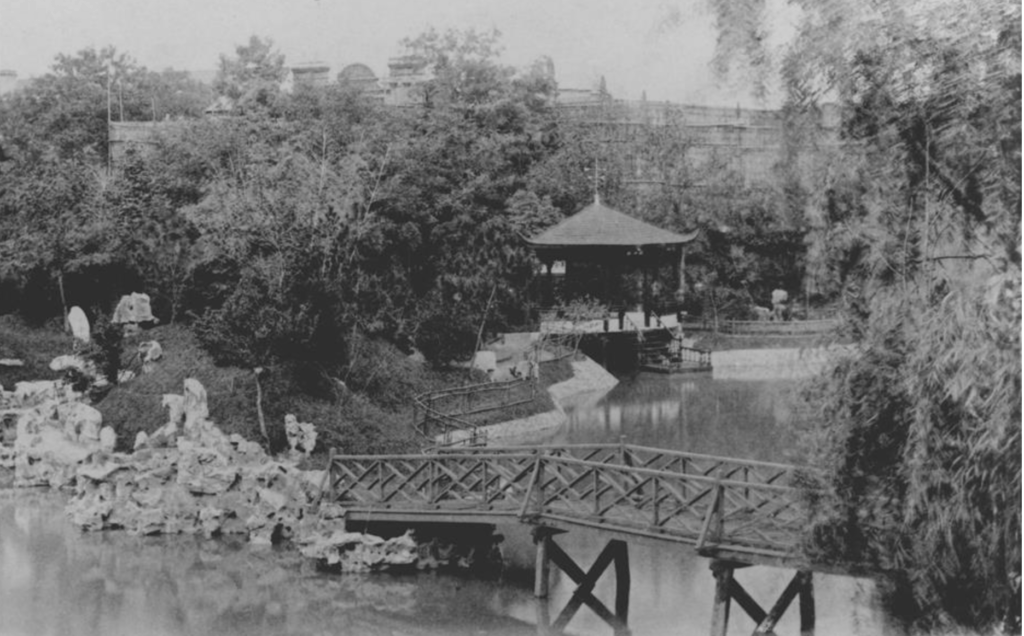
Archive photograph · capture year unrecorded
Water, bridge and pavilion in the former Aili Garden. The source credits Shanghai Library; this is not a photograph of a surviving garden.
Shanghai Library / Historic Shanghai · Image source · Source credits and rights
Garden at a glance
- Construction
- Winter 1903–autumn 1909Based on the early garden record; other dates exist
- Garden design
- Huang Zongyang · Buddhist monkDirected the garden’s creation
- Character
- Chinese garden with varied influencesPavilions, pools, bridges and homes
- Original use
- Private garden and family homeAlso hosted educational, cultural and charitable activities
- Today
- Garden lost · site of Shanghai Exhibition CenterNot a renamed or restored garden building
- Present address
- 1000 Middle Yan’an Road, Jing’an, ShanghaiNear West Nanjing Road and Tongren Road
The people behind the address
A life in brief
Silas Aaron Hardoon (1851–1931) came from a Jewish family in Baghdad and became a Shanghai property magnate after working in commerce. Shanghai-born Luo Jialing (1864–1941), often called Liza Hardoon in English, was a Buddhist. Their household connected Jewish migration with local life; Luo deserves to be read as an owner and patron in her own right.[4] [6] [2]
Contributions and influence
Their patronage supported education, charity and religious publishing. In 1914 Luo backed the monk Yuexia’s Huayan school in the garden; it later moved out, while other educational ventures followed on the estate. Wealth, concession society and cultural philanthropy meet here—a history larger than a romantic garden legend.[4] [6] [2]
The garden’s origins
Why was it built here?
Aili Garden, also called Hardoon’s Garden, was the home of Silas Hardoon and Luo Jialing. To imagine it, look beyond the exhibition centre’s tower: the low houses, water and bridges in the old photographs belong to a different urban scale, shaped by domestic life, study and visitors.[2]
The Buddhist monk Huang Zongyang directed the garden’s design. Reading his garden preface alongside an early photographic album, researcher Li Jun dates construction from winter 1903 to autumn 1909. Other accounts give 1904 or 1910; this page follows the chronology supported by that early record.[1]
Look through the old photographs
Three details worth a closer look
Water, bridges and framed views
Follow the bridge in the opening photograph toward the pavilion, then the trees and distant roofs. Foreground, middle ground and background unfold in layers. A garden rewards movement; one photograph records a stopping point, not its complete plan.[2]
Houses behind the garden wall
The wall and house photographs preserve decorated gateways, upturned eaves and timber details. This was also a working household, not merely a series of scenic stops. Look from the eaves and balustrades to the trees around them: leisure and domestic life shared this landscape.[2]
The stone boat as a gathering place
People beside the stone boat’s balustrade give a sense of scale. It resembles a vessel but is garden architecture. Compare this gathering place with the exhibition centre’s forecourt to see how the site changed from private estate to exhibition venue.[2]
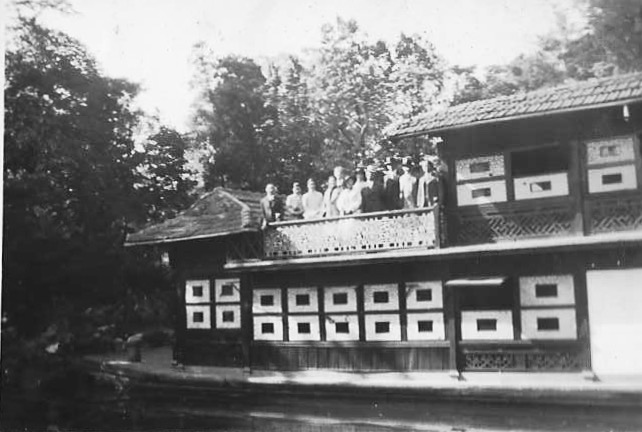
Archive photograph · capture year unrecorded
The Barrs and companions at the stone boat. The source credits Betty Barr for the photograph but gives no capture year.
Courtesy Betty Barr / Historic Shanghai · Image source · Source credits and rights
One site, different lives
History unfolds between the photographs
Captions distinguish photographic dates from publication dates; periods without reliable images are covered in the text.
- 1903–1909
Making the garden
Huang Zongyang directed construction, dated here to winter 1903–autumn 1909. The garden photographs have no confirmed capture dates; they are not presented as opening-day records.[1]
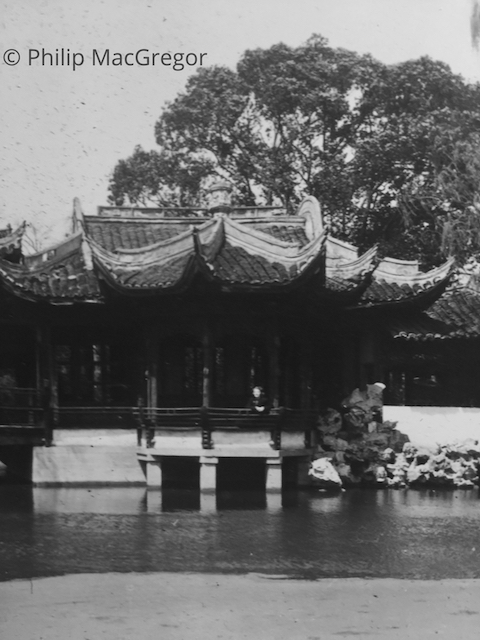
Archive photograph · capture year unrecorded
A pavilion and balustrades over the pool, with the roof reflected in the water.
© Philip MacGregor / Historic Shanghai · Image source · Source credits and rights
- 1912 · 04 · 06
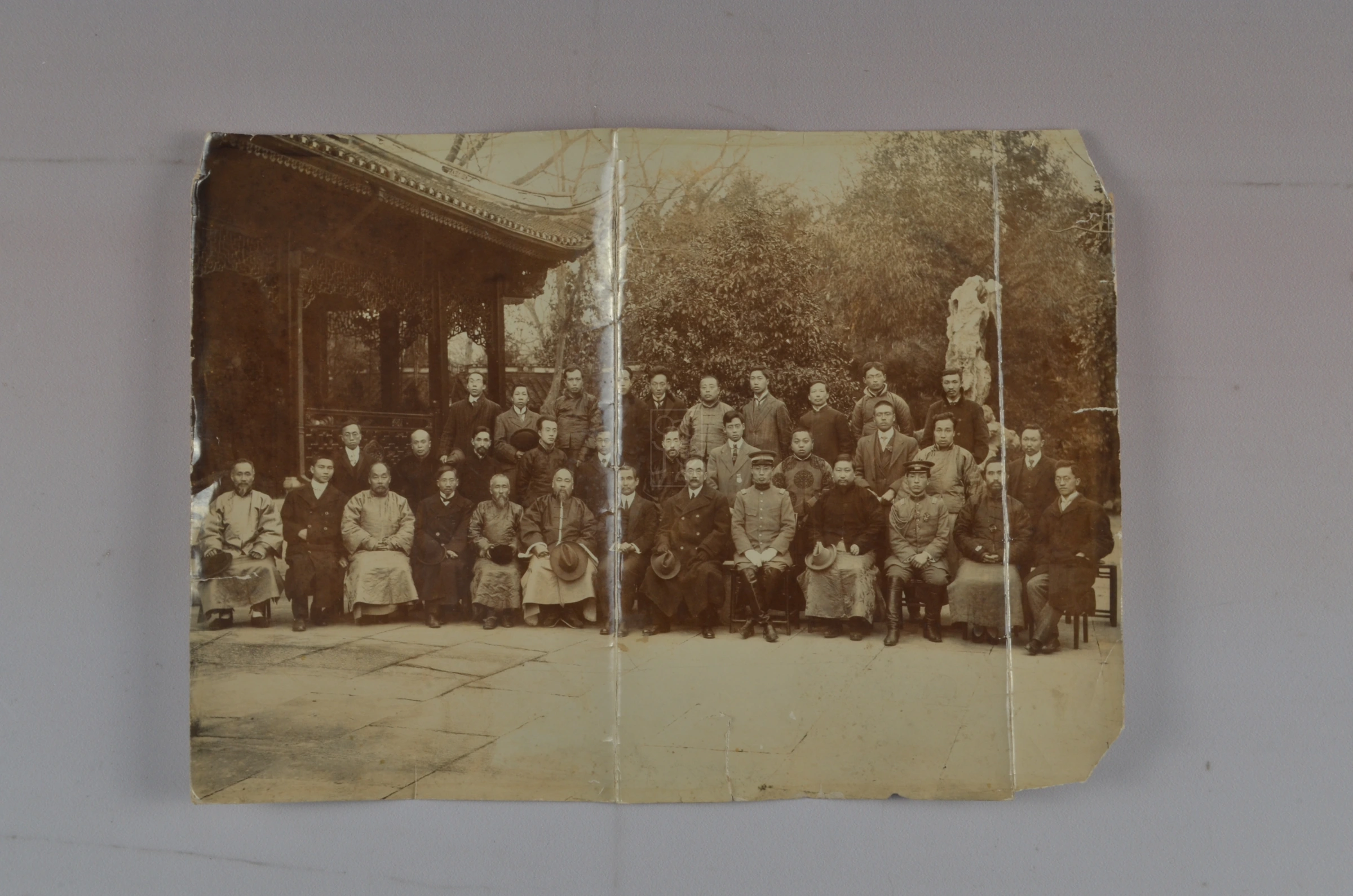
Sun Yat-sen and guests
The museum identifies this as the 6 April 1912 gathering hosted by Zhao Fengchang for Sun Yat-sen and provisional-government figures. Donated by Yang Xiaofu and Yang Cheng, the original is held by the Soong Ching Ling Mausoleum administration.[5]
6 April 1912
Zhao Fengchang’s gathering for Sun Yat-sen and provisional-government figures at Hardoon’s Garden. The original photograph’s folds and edges remain visible.
Soong Ching Ling Mausoleum collection · donated by Yang Xiaofu and Yang Cheng · Image source · Source credits and rights
- 1914
A school in the garden
Luo Jialing supported Yuexia’s founding of Huayan, a Buddhist school. It subsequently moved out, while other educational activities continued on the estate. The garden was a home and a setting for the circulation of knowledge.[4]
- 1931
- From 1941
- 1954–1955
A new building on the site
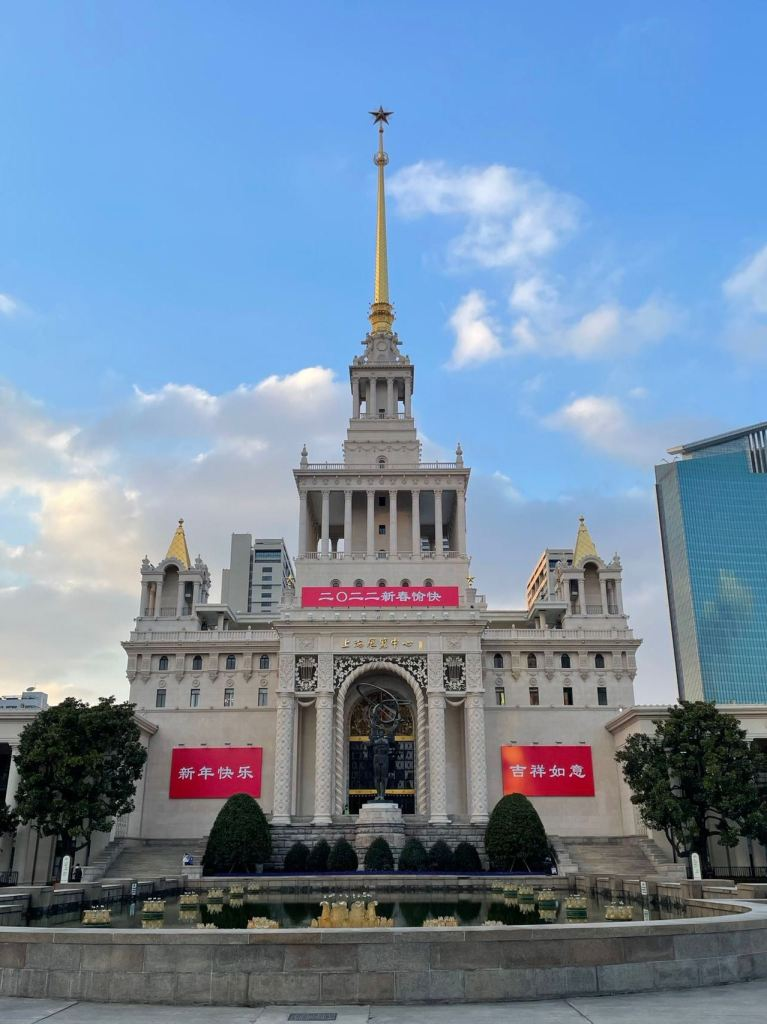
The venue’s official chronology records a groundbreaking in May 1954 and the completed Sino-Soviet Friendship Building’s first exhibition in March 1955. This was redevelopment, not a new name for the old garden.[7]
- 1968 / 1984
Towards today’s exhibition centre
The building was renamed Shanghai Exhibition Hall in 1968; Shanghai Exhibition Center was established in 1984. Walk West Nanjing and Tongren roads, then return to the photographs to imagine the vanished estate.[7]
Modern photograph · capture year unrecorded
Shanghai Exhibition Center on the former site. This later photograph shows the replacement building, not surviving garden structures or the 1955 opening.
Historic Shanghai · Image source · Source credits and rights
Today and visiting
What can you see on the site today?
The original garden is gone. Today you visit the Shanghai Exhibition Center built on its former site; do not mistake its buildings for surviving garden structures. Exhibitions, entrances and access vary with events—check the venue’s notices before travelling.[7] [8]
- Address
- 上海市静安区延安中路1000号 上海展览中心
- Reading the site
- Read the block from West Nanjing and Tongren roads; there is no surviving Hardoon Garden to enter.
Sources checked: 2026-10-29 · Access and events follow venue notices.
Shanghai and the world
From Baghdad to Shanghai, from garden to exhibition
One address connects Jewish migration, Chinese garden culture and Buddhist education with a later chapter of Sino-Soviet cooperation. A walk along Tongren Road, followed by the Sassoon story on the Bund, reveals international connections in private lives and vanished spaces as well as monumental buildings.[6] [7] [8]
Walls and owners: more archive images
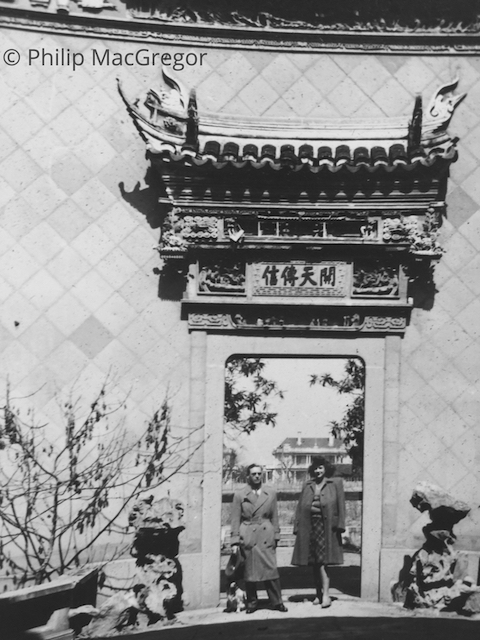
Archive photograph · capture year unrecorded
Decorative gateway and opening in the garden wall; the original Philip MacGregor credit is retained.
© Philip MacGregor / Historic Shanghai · Image source · Source credits and rights
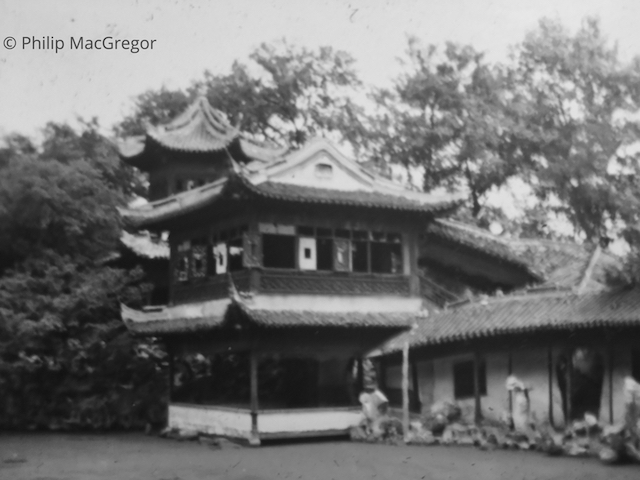
Archive photograph · capture year unrecorded
Eaves and timber façade of a Chinese-style house in the garden; the source does not identify its exact name.
© Philip MacGregor / Historic Shanghai · Image source · Source credits and rights
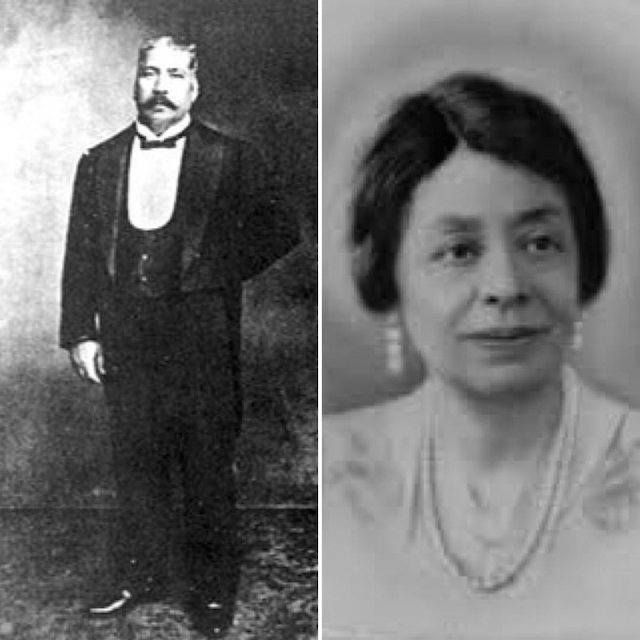
Archive photograph · capture year unrecorded
Paired portraits of Silas Hardoon and Luo Jialing. Individual photographers and capture dates are not identified by the source.
Historic Shanghai · Image source · Source credits and rights
Text and image sources
This article reorganizes the sources below. Text adapted and condensed from Wikipedia, including its translations here, is provided under CC BY-SA 4.0; the original contributors are listed in the article’s revision history. Image licences are listed separately beneath each photograph.
- Li Jun · Research on Aili Garden ↗
Uses the early garden preface and photographs to examine construction dates.
- Historic Shanghai · Inside Hardoon’s Garden ↗
Family photographs, garden life and descendants’ recollections. Original credits are retained without assuming the contributor was the photographer.
- Hugues Martin · Silas Hardoon’s Garden ↗
Context on Bubbling Well Road and the site. Its fire and exhibition-centre dates are not adopted without cross-checking.
- Wikipedia · Aili Garden ↗
Names and education history, cross-checked against other sources; the erroneous war date is not repeated.
- Shanghai Sun Yat-sen and Soong Ching Ling Cultural Relics Administration · 1912 photograph ↗
Date, event and collection: Soong Ching Ling Mausoleum administration; donated by Yang Xiaofu and Yang Cheng.
- Shanghai / SHINE · Memory of Aili Garden ↗
Context on the owners, education, publishing and changes to the site.
- Shanghai Exhibition Center · official chronology ↗
May 1954 groundbreaking, March 1955 first exhibition, and changes in 1968 and 1984.
- Shanghai Government · Tongren Road walk ↗
Present address and Tongren Road context; 2024 opening hours are not treated as permanent.
Image handling and dating
Images come from the archives or image source pages listed beneath each photograph. We resize and compress them to WebP, preserving their original proportions without colourisation or added detail. Grain, blur and scanning marks in historical photographs are retained.
Undated photographs do not inherit the date of adjacent timeline events. The 1912 group photograph uses its museum date; the modern exhibition-centre image is not presented as a 1955 photograph.
Source watermarks, edges and proportions are retained. The 4928×3264 museum image is delivered at 2400×1590; the other photographs are not upscaled.