No. 20, the Bund · Zhongshan East First Road
Peace Hotel North Building · Sassoon House
和平饭店北楼 · 沙逊大厦
Beneath the green peak, from the Cathay Hotel to the Peace Hotel
Explore the past and present of No. 20 on the Bund through authentic photographs, architectural details and a historical timeline.
Follow its history through photographs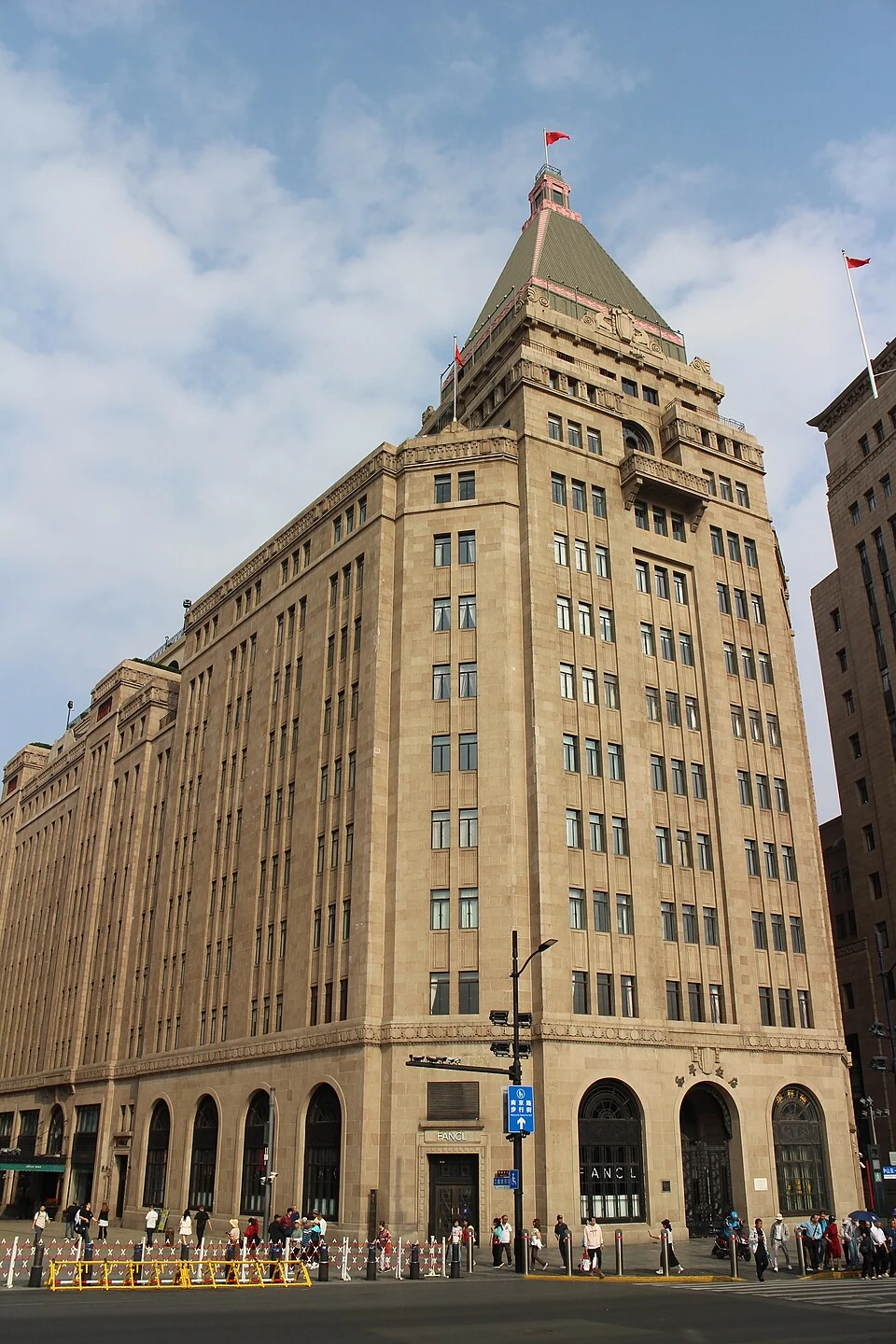
1 May 2025
The river-facing façade and green pyramid roof of the Peace Hotel’s North Building. This is Sassoon House at 20 the Bund, not the Palace Hotel south of Nanjing East Road.
Suicasmo · Image source · CC0 1.0
At a glance
- Construction
- 1926–1929Cathay Hotel opened in 1929
- Design
- Palmer & TurnerPalmer & Turner
- Style
- Art DecoRead alongside the façade and original use.
- Original use
- Hotel, shops and officesOriginal function of the surviving building.
- Current use
- Fairmont Peace Hotel, ShanghaiInstitutional information checked through October 2026.
- Location
- 20 the Bund · 20 Nanjing East RoadNorth Building; across the street from the South Building at 19 the Bund
The beginning
Why was it built here?
The green peak north of Nanjing East Road belongs to Sassoon House, now the Peace Hotel’s North Building. Financed by Victor Sassoon, it originally combined a hotel, shops and offices; the Cathay Hotel was its most celebrated part.[1]
It is a different building from the Palace Hotel south of the street. The South Building was built earlier and only later acquired the Peace Hotel name. Distinguishing Nos. 20 and 19 places the hotel stories in old photographs on the correct street corner.[1]
Look up, then look closer
Three details worth a closer look
Find the green roof first
The copper-clad pyramid rises above the main building. Stepped masses below draw the eye towards its tip. Seen along the river, it is the clearest marker of the Nanjing East Road junction.[1]
Follow the vertical window rows
Orderly vertical lines emphasise the height of the stone façade. Compare it with the lower, reddish Palace Hotel to the south to see the Bund’s progression from low-rise to high-rise hotels.[1]
A corner between two urban rhythms
One side faces the Bund; the Nanjing East Road wing joins the shopping street. Include the junction and both façades as well as the peak to understand the footprint and corner arrangement.[1]
One building, changing roles
History unfolds between the photographs
From earlier buildings to the one standing today. Captions distinguish photographic dates from publication dates; periods without reliable images are covered in the text.
- 1926
Old buildings make way for a tower
Sassoon began demolishing the existing houses and commissioned Palmer & Turner. Hotel, office and retail uses were planned together.[1]
- 1929
- 1930s
A hotel in international travel memory
Leiden University’s image collection preserves a street view of the Cathay Hotel. The source records publication in 1933, not an exact exposure date; it shows the North Building, not the Palace Hotel across the street.[1]
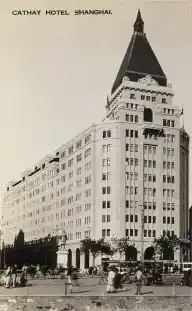
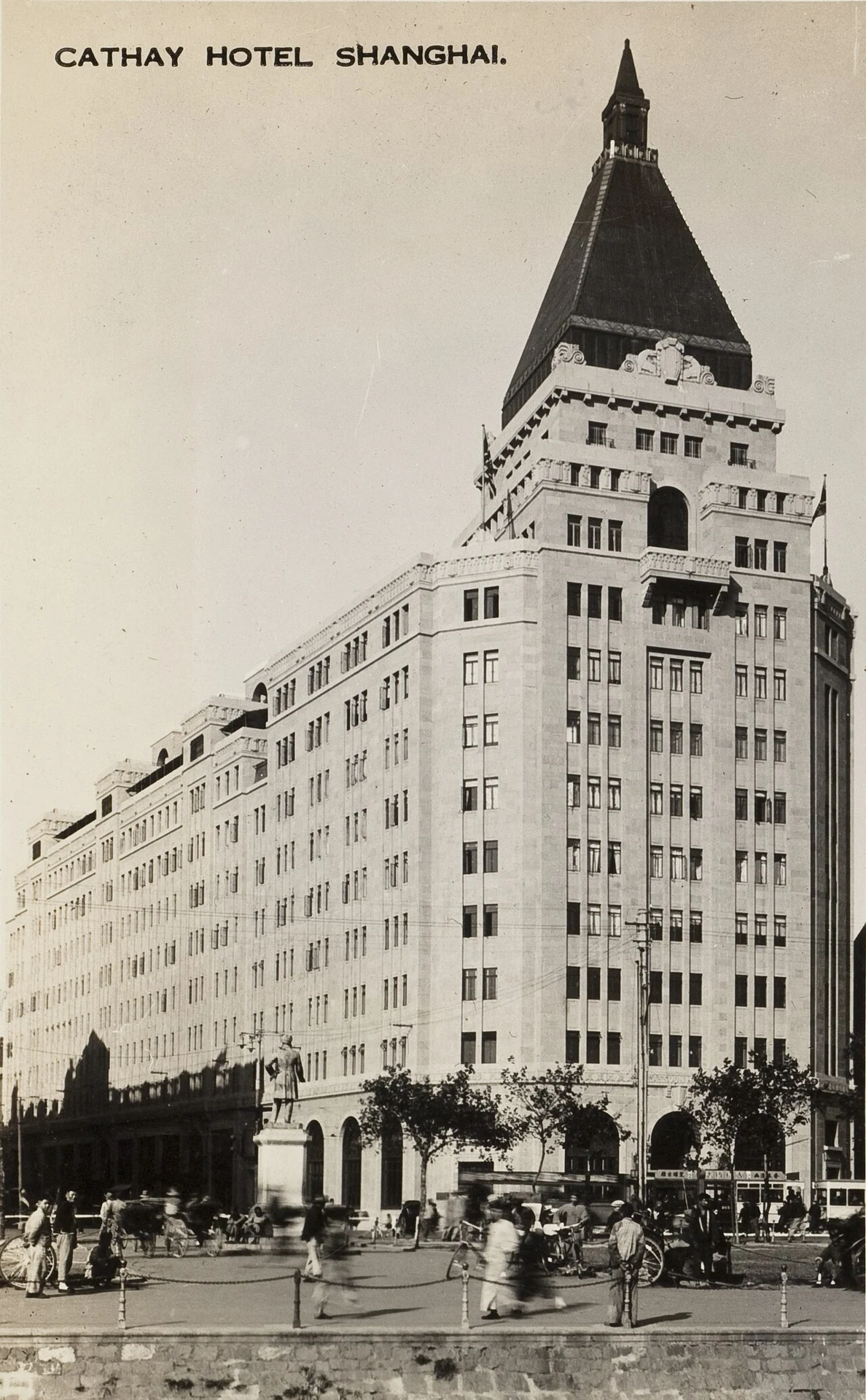
Source records publication in 1933 · exposure date unknown
A Cathay Hotel street view from Leiden University’s KITLV collection. The source records publication in 1933; digitisation is not treated as the exposure date.
Photographer unknown; KITLV collection, Leiden University Libraries · Image source · CC BY 4.0
- 1956
The Peace Hotel name appears
After changes of use, the hotel reopened as the Peace Hotel. Its familiar name dates from this stage.[1]
- 1965
North and South become a pair
After the former Palace Hotel was incorporated, the buildings on either side of Nanjing East Road became the South and North Buildings. These names describe a management relationship, not their separate construction histories.[1]
- 2007–2010
Restoration and reopening
After restoration, the North Building reopened in 2010 as the Fairmont Peace Hotel, continuing its hotel function.[4]
- Today
Today and visiting
Discover the building from the street
View the whole silhouette from the riverside promenade, then approach along the pavement to examine entrances and stonework.[2] [3]
- Exterior
- View the front from the Huangpu River side; use nearby pedestrian crossings.
- Details
- Look for entrances, capitals and window rows; avoid lingering in doorways.
- Peace Museum
- The hotel website distinguishes guest tours from non-guest packages. Contact the hotel to confirm a reservation; do not assume unrestricted entry.
Sources checked: 2026-10-19 · This architectural account does not imply public access to interiors. Historical opening hours are not evidence of current access.
Shanghai and the world
A trade and hotel network from Bombay to Shanghai
The Sassoon family’s business linked Shanghai with ports including Bombay. In the twentieth century, property and hotels gave these overseas connections a visible architectural form; travellers, restaurants, banquets and music added everyday memories.[1]
Text and image sources
This article reorganizes the sources below. Text adapted and condensed from Wikipedia, including its translations here, is provided under CC BY-SA 4.0; the original contributors are listed in the article’s revision history. Image licences are listed separately beneath each photograph.
- Wikipedia · Peace Hotel North Building · Sassoon House ↗
Basic history and architectural information; the source article was rewritten and arranged in Chinese.
- Fairmont Peace Hotel · Official website ↗
Checks current hotel operation, address and services.
- Fairmont · Peace Museum ↗
Guest tours and non-guest packages have different arrangements; confirm in advance.
- Shanghai Municipal Government English website · Peace Hotel restoration ↗
Documents three years of restoration and reopening in 2010.
Image handling and dating
Images come from the archives or image source pages listed beneath each photograph. We resize and compress them to WebP, preserving their original proportions without colourisation or added detail. Grain, blur and scanning marks in historical photographs are retained.
Photographs retain their original proportions and colours; they have only been resized and converted to WebP. Preview and full-resolution images show the same frame.
Dates for historical photographs distinguish exposure, publication and digitisation according to the source.