113 Wukang Road
Ba Jin’s home
巴金故居
Writing returned to its desk and garden
113 Wukang Road. Ba Jin’s family moved from Huaihai Fang in September 1955 into a house built in 1923. A main house, two ancillary buildings and a garden held writing, receiving visitors and family life within the same domestic compound.
Explore the historical timeline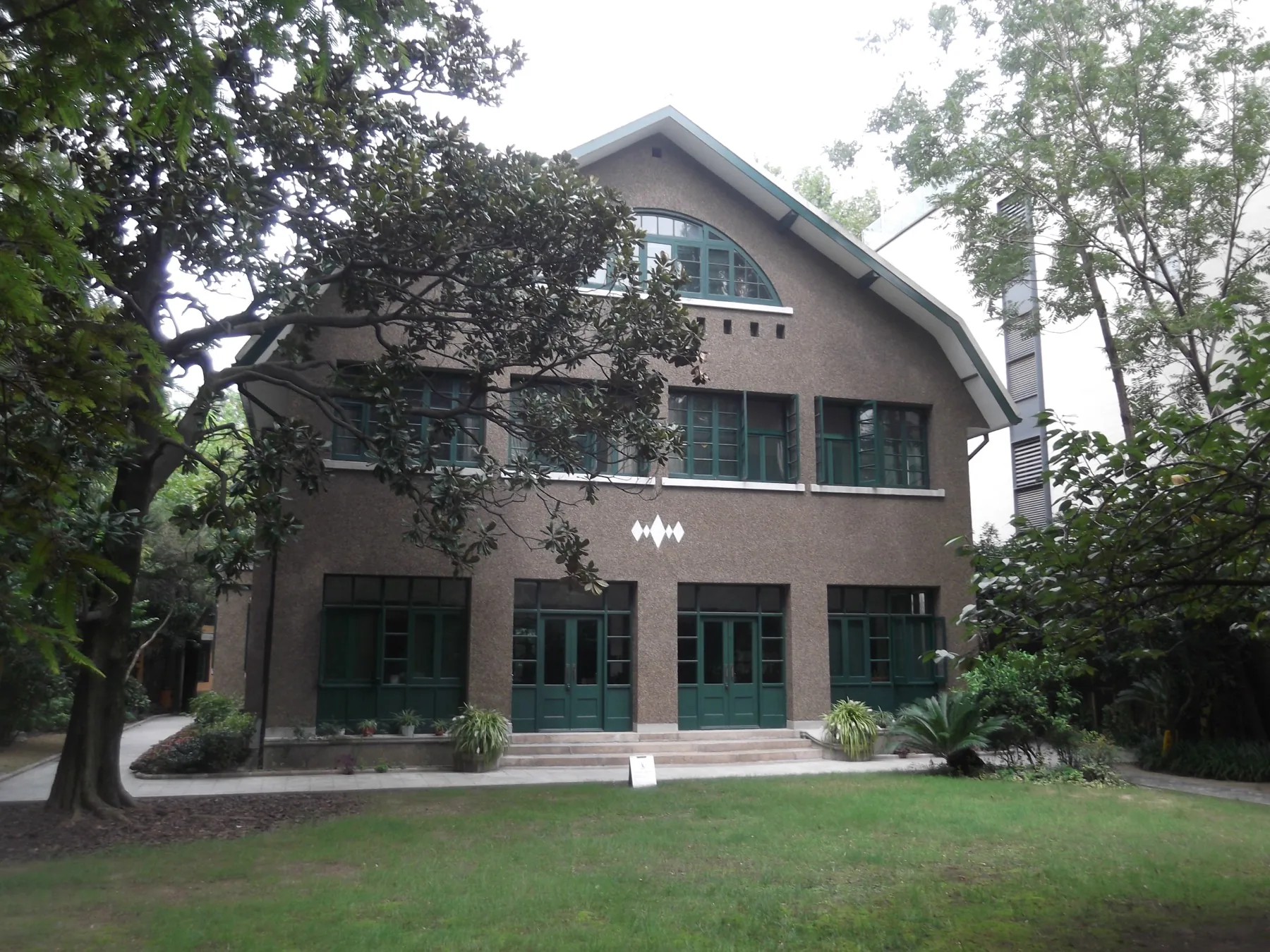
28 September 2013
Ba Jin’s home seen from the garden in 2013, after public opening; this is not a photograph from his arrival in 1955.
Jpbowen · Image source · CC BY-SA 4.0
At a glance
- Built
- 1923See the account and sources below
- Architect
- Not identified in the checked sourcesSee the account and sources below
- Architecture
- Two-storey garden house with an atticSee the account and sources below
- Original use
- ResidenceSee the account and sources below
- Use today
- Writer’s house museum and memorial displaysSee the account and sources below
- Address
- 113 Wukang RoadSee the account and sources below
The people behind the address
A life in brief
Ba Jin (1904–2005), born Li Yaotang in Chengdu, was a novelist, essayist, translator and editor. After studying in France, he spent much of his literary career in Shanghai. He moved to No. 113 in 1955; it became both his family home and a place of late-life writing.[4] [5]
Contributions and influence
Family, Spring and Autumn challenged the traditional family order through young people’s struggles and became major works of modern Chinese literature. Random Thoughts later explored historical responsibility through self-examination. His translation, editing and encouragement of younger writers also supported literary exchange and new Chinese writing.[4] [5]
The beginning
Why was it built here?
Ba Jin’s family moved from Huaihai Fang in September 1955 into a house built in 1923. A main house, two ancillary buildings and a garden held writing, receiving visitors and family life within the same domestic compound.[1] [2] [3]
Ba Jin completed Random Thoughts here, linking the rooms to his later reflection and writing. Restoration and trial opening in 2011 made private scenes accessible to readers. Displayed domestic rooms should not be taken as proof that nothing changed over time.[1] [2] [3]
Look up, then look closer
Three details worth a closer look
22 March 2025
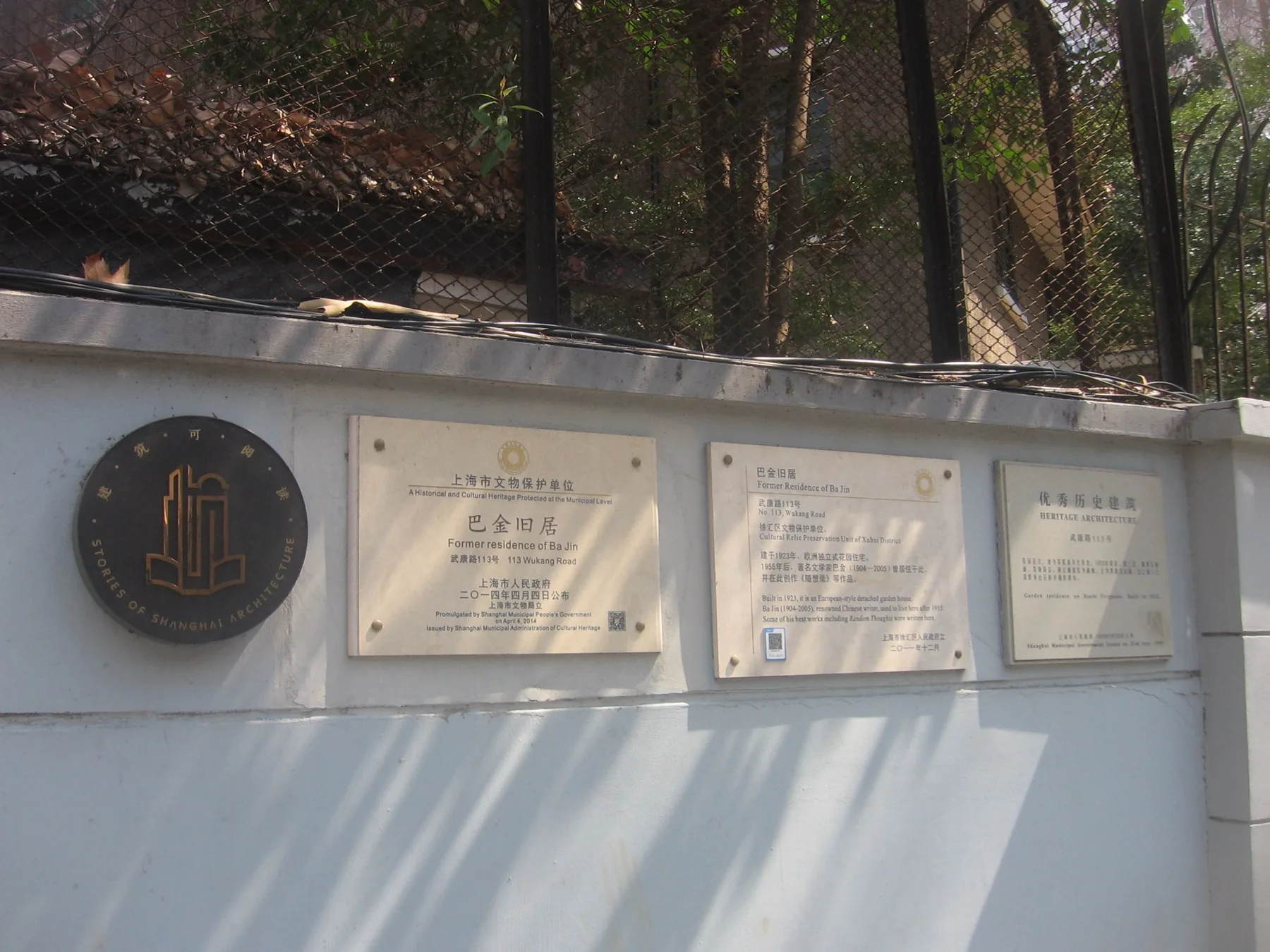
Street wall and heritage plaques in 2025 identify No. 113; the main house is screened by fencing and planting.
Zhou Guanhuai · Image source · CC0 1.0
One building, changing roles
Read the building through time
Captions distinguish photographic dates from publication dates; periods without reliable images are covered in the text.
- 1923
- September 1955
- 1 December 2011
Today and visiting
Discover the building from the street
Find No. 113 on Wukang Road and consult the house museum’s current visitor notices.[1] [2] [3]
- What to look for
- Look at pebbled walls, green windows and garden before reading the displays about writing.
- Visiting
- Check current museum arrangements for dates, booking and indoor photography.
Sources checked: 2026-10-22 · Check current notices for access and business hours. A historical account of use is not confirmation of today’s operating status.
Shanghai and the world
Part of Wukang Road’s lived history
Literature gains a physical setting here. Lane 100 also remembers Wang Yuanhua and Zhang Ke, but its different present use requires a different kind of visit.[1] [2] [3]
Compare the garden household with Midan Apartments nearby, where collective housing fits a tightly constrained corner.[1] [2] [3]
Text and image sources
This account is based on the sources below. Unverified details are identified as such. Where photographs are included, sources and licences are listed beneath each image.
- Shanghai Civil Affairs Bureau · A walk along Wukang Road ↗
A 2023 account; descriptions of use refer to the period of that article.
- Shanghai Municipal Information Office · Ba Jin’s home ↗
2022 architectural introduction, republished by Changjiang Daily’s website; building, family and conservation.
- Shanghai Culture and Tourism Bureau · Ba Jin house opening ↗
December 2011 report on restoration and trial public opening on 1 December.
- China Writers Association · Ba Jin ↗
The people behind the address
- Literature and Art Weekly · Ba Jin as Writers Association chairman ↗
The people behind the address
Image handling and dating
Images come from the archives or image source pages listed beneath each photograph. We resize and compress them to WebP, preserving their original proportions without colourisation or added detail. Grain, blur and scanning marks in historical photographs are retained.
Photographs retain their full original framing, with proportional resizing and WebP conversion; previews are compressed separately. Dates are capture dates, not upload dates. Reuse follows the credited licences. No licensed early-construction photograph has been located.